Tuling Institutional HCM module
Statutory Compliance (PF/ESI/PT/TDS)
State-wise, date-versioned statutory rules with a real TDS approve-and-close workflow and cryptographic integrity checks.
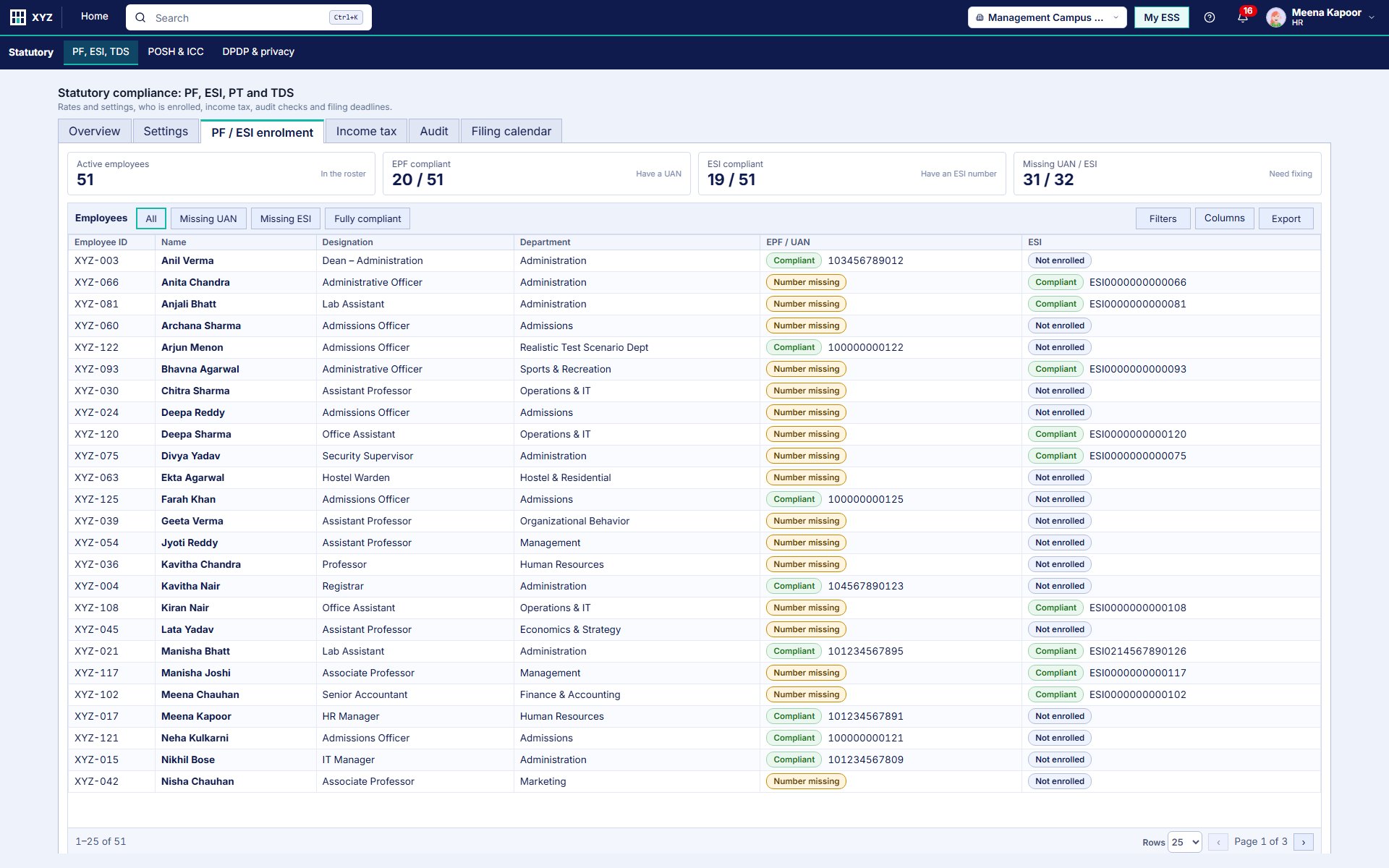
Statutory Compliance (PF/ESI/PT/TDS) in action
Screens from the Tuling ERP. Select one to view it full size.
About this module
Statutory compliance rules change — by state, by year, sometimes by notification mid-year — and getting it wrong isn’t a UX inconvenience, it’s a real financial and legal risk. Tuling HCM treats statutory rules as versioned, date-effective data with an approval workflow and cryptographic integrity checks, not a config value someone edits directly in production the day a rate changes.
Note: Form 16 generation is not yet available in the current build — the TDS deduction ledger (section codes, challan numbers, BSR codes) is modeled and ready for it, but the generation step itself isn’t built. Worth confirming directly with us if that’s a requirement for your finance team’s timeline.
Capabilities
-
State-Wise, Date-Versioned Rules
Provident Fund, ESI, and Professional Tax rules are versioned by effective date and state code, with minimum/maximum contribution caps — because these rules genuinely differ by state and change over time, not a single hardcoded national rate.
-
TDS Rule Approve-and-Close Workflow
TDS section and rule administration goes through an explicit approve-then-close workflow, not a rule that's live the moment someone edits it.
-
Cryptographic Integrity Verification
An integrity hash-check on statutory rules and an auditor dashboard with HMAC-based verification — built so a compliance audit can confirm rules weren't quietly changed after the fact.
-
Tax-Regime Comparison & Arrears Calculator
Compare old vs. new tax regime impact and calculate arrears directly in the system, rather than in a side spreadsheet finance keeps separately.
-
Gratuity Rule Engine
Gratuity calculation rules are configurable and versioned alongside PF/ESI/PT, kept in the same statutory framework rather than a one-off calculation elsewhere.